"There's no right or wrong way of composting, and people get panicked
that they have the wrong recipe. Composting is a natural phenomenon—it's decomposing; you're just helping it along a bit."
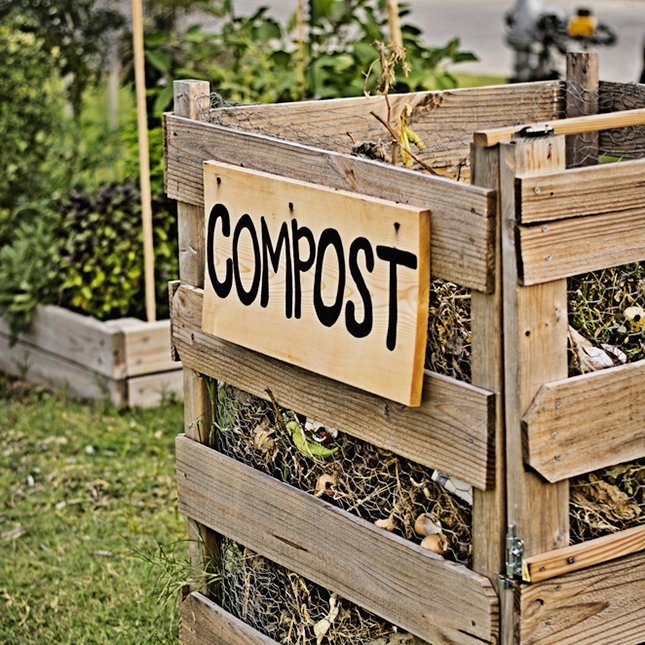
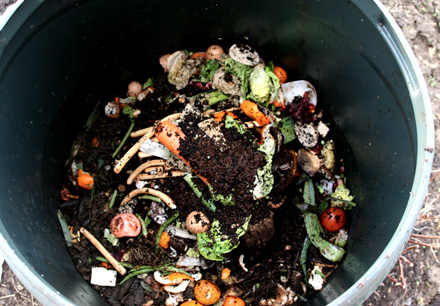
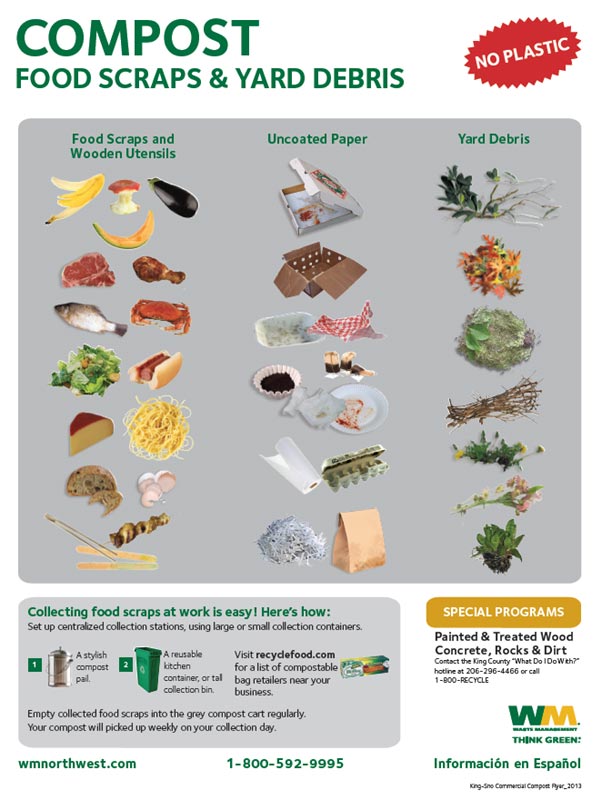
BinsCompost bins aren't a necessity; you can What to Add
| Compost MaterialsComposting materials are divided into Don't Add
|
Ask Yourself Four Basic Questions:
1. Is it biodegradable?
2. Will it help make high-quality, nutrient-rich compost?
3. Did it come from a chemical-free lawn?
4. Is it free of disease, toxins, and other contaminants?
Other Things to Consider
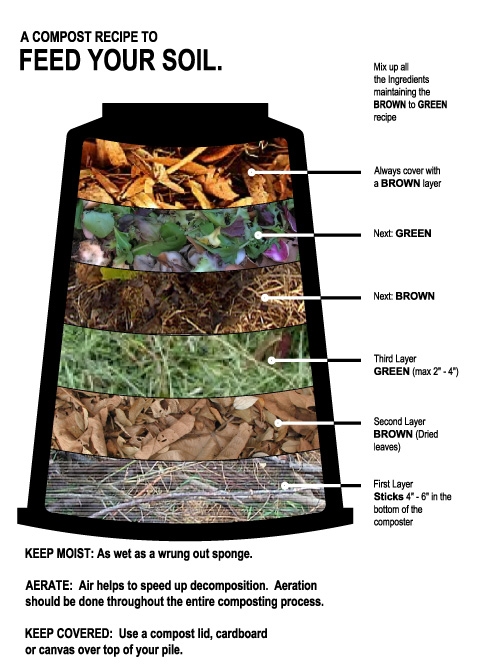
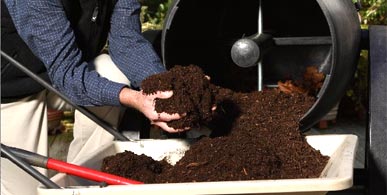
Water- The micro-organisms that drive your compost pile need decent amounts of moisture to survive; strive towards a moisture content of about 50%. Check the moisture content of your compost by taking a handful from your pile and squeezing it in your hand. This should leave your hand moist and not drip any more than a few drops. Your "green" materials should be adding moisture, but you can also look at adding water if necessary. Cover your pile with a lid during heavy rain to avoid killing your micro-organisms with excessive moisture.
Air/Oxygen- Aerating your compost is not necessary but may help in speeding up the decomposition process. Not aerating your pile is also likely to cause an unpleasant order. If
you want to compost quickly, stir your compost up every 3 to 5 days. In general, stirring every
two to three weeks will produce mature compost in about 6 months. Thus, aerating not only
helps avoid odors, but also makes a significant difference in how fast your compost matures.
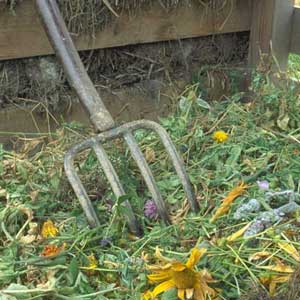
You can aerate by turning the pile with a pitchfork or shovel.

|
C2C Paper.docx Size : 319.816 Kb Type : docx |